
Plantar warts
What are plantar Warts?
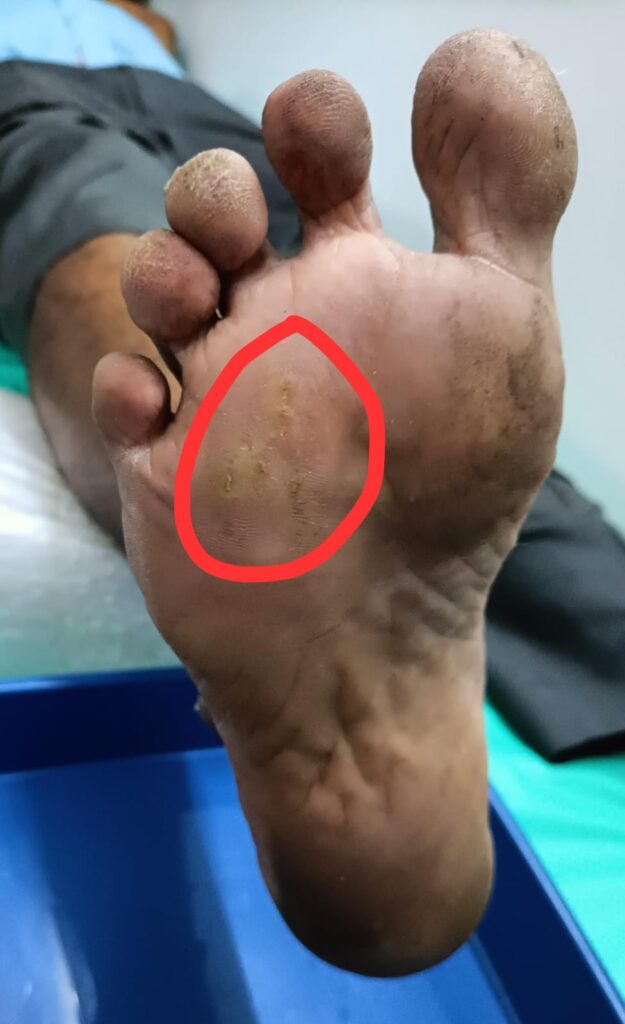
Warts are one of several soft tissue conditions of the foot that can be quite painful. Also known as verruca vulgaris. They occur on the bottom of the foot.
Causes
They are caused by the human papillomavirus (HPV)
A break in the skin is required for infection to occur.
The virus invades the skin through small or invisible cuts and abrasions. The plantar wart is often contracted by barefoot walking on dirty surfaces. The causative virus is active in warm, moist environment.
Risk factors include use of communal showers, having had prior warts, and poor immune function.
Children, especially teenager are more susceptible to warts than adults. Some people are immune to warts.
If left untreated, they grow bigger circumference and can spread into groups of several warts called as mosaic warts. Plantar warts spread by touching, scratching, or even by contact with skin shed from another wart. They bleed, hence cause a route for spread and infection.
In about a third to two-thirds of cases, they go away without specific treatment, but this may take a few years.
Symptoms
Its color is typically similar to that of the skin. Small black dots often occur on the surface. One or more may occur in the same region.They cause painful walking due to the pressure it produces specially on the weight-bearing areas of the foot the ball of the foot, or the heel.
They are often mistaken for corns or calluses, which are layers of dead skin that build up to protect an area which is being continuously irritated.
Plantar warts are hard and flat, surface is rough and well-defined.
Home Care
Self-treatment is always dangerous and not advised. Over-the-counter medications contain acids or chemicals that destroy healthy skin cells, Use of such medications is really threatening especially should be avoided by people with diabetes and those with cardiovascular ,circulatory disorders and presence of an active infection.
Diagnosis and Treatment
Your diabetic foot surgeon will thoroughly examine your foot condition and prescribe appropriate treatment for your plantar wart and discuss with you the need of additional modalities of treatment if required.
Prevention
As all warts are contagious, precautions should be taken to avoid spreading them. Following precautions to be followed
- Cover them with an adhesive bandage while swimming
- Wear latex swimming socks
- Do not share towels
- Avoid barefoot walking
- Wear correct fitting comfortable footwear
- Change socks daily
- Keep feet clean and dry
- Check children’s feet periodically
- Avoid direct contact with warts from other persons or from other parts of the body
- Do not ignore growths on, or changes in, your skin
Visit your diabetic foot surgeon periodically as part of your health checkup