
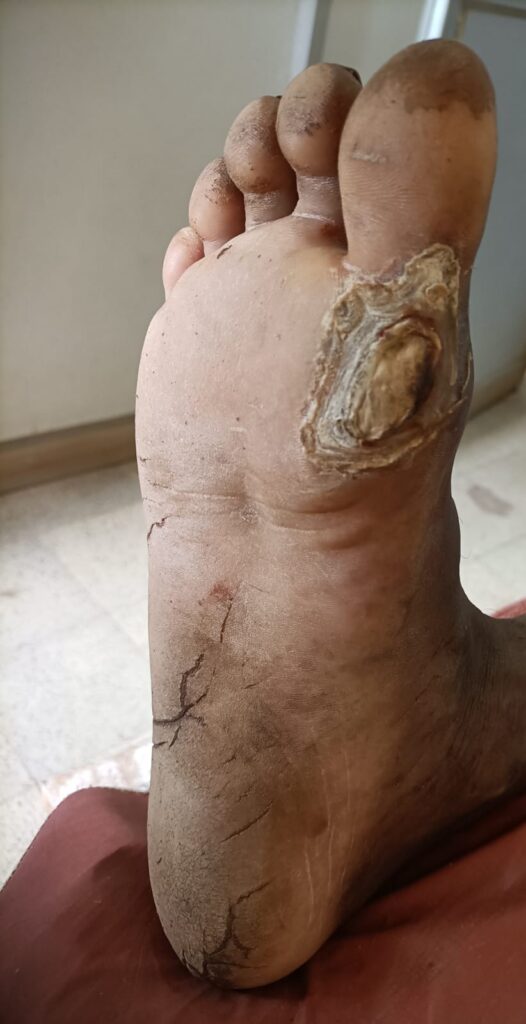
EDUCATIONAL WRITE UP ON CALLUS
Calluses are areas of thickened skin that develop to protect that area from irritation. They occur when something rubs against the foot repeatedly or causes excess pressure against part of the foot. If the thickening of skin occurs on the bottom of the foot, it’s called a callus. Basically it is a thickening of the epidermis to a localised area caused by repititive friction or pressure. It is also known as Tyloma .
Patients with Diabetes and peripheral vascular disease should be very careful and consult their Diabetic Foot surgeon at the earliest if they notice these calluses as they are prone for infection leading to osteomyelitis

Characteristics of calluses
- Diffuse, flattened area of thick skin
- Dry, scaly and flaky
- Typically painless
- most commonly found on Plantar aspects of foot but may also be seen in palmar aspects of the hands
Treatment
1) Special Rehydration creams prescribed by your diabetic foot surgeon devoid of steroids
2) your diabetic foot surgeon will assess your foot carefully and determine the cause for it and try to eliminate the cause of it.
3) Your foot surgeon will do something known as shaving of the callus ( **don’t attempt yourself)*
4) Special moisturizer to help softening of the skin
5) Your diabetic foot surgeon will look if you have any deformities and correct them
Special precautions to be taken by patient
- No self surgery
- To consult Diabetic Foot surgeon at the earliest to avoid complications like osteomyelitis ( bone infection) and further proceeded by gangrene and amputation.
- once in every 3 months foot check up by your diabetic foot surgeon to detect foot problems and prevent further complications
- Don’t apply creams and moisturizers between toes as they catch moisture and cause fungal infection.
- Don’t use and apply on the counter corn caps as they contain acid and further complicate things and exacerbate infection which is more dangerous if you are diabetic and have poor circulation.Prevention
Wear properly fitted shoes. If you have any deformities of the toe or foot, talk to your podiatrist or Foot surgeon to find out what shoes are best for you.
Prevention
Wear properly fitted shoes. If you have any deformities of the toe or foot, talk to your podiatrist or Foot surgeon to find out what shoes are best for you.
Prevention
1) Wear proper fitting footwear.
2)Your footwear will be customised according to your needs by your diabetic foot surgeon.
Important point 👉
This is the first and important preventable cause of amputation provided you visit your diabetic foot surgeon early