
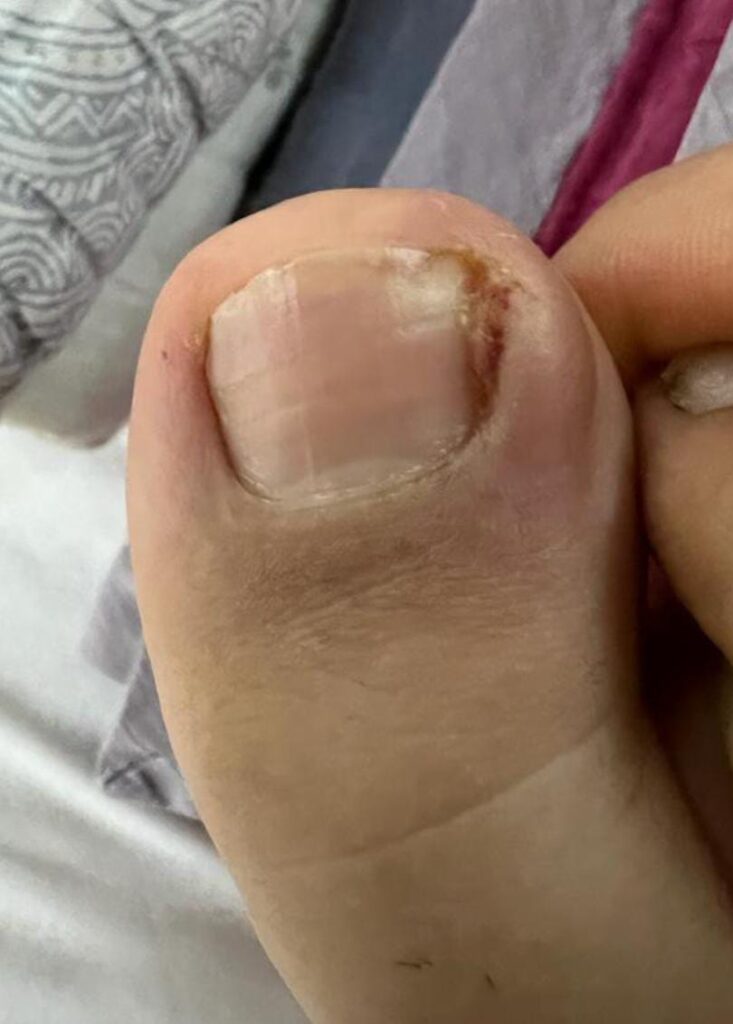
educational write up on ingrown toe nail
Nails are tough structures . They have a protective protein called alpha keratin. As we know these nails protect our fingers and toes from injuries, it also helps us in extended actions like cutting and scratching. An ingrown toe nail also known as onychocryptosis develops when corner of toe nail grows down into the skin An ingrown toenail may present at any age, but it affects most commonly teenagers and young adults. The hallux nails are the most frequent location.Diabetics are most commonly affected.


Causes of Ingrown toe nail
- Improperly trimmed nails
- Heredity
- Shoe pressure; crowding of toes
- Your feet if repeatedly getting injured from normal activities
Symptoms of Ingrown toe nail
- Pus discharge
- Pain
- Redness
- Swelling
- Bad odor
- Flesh popping out from nail edges
Diagnosis and Treatment of Ingrown toe nail
Your diabetic foot surgeon will remove the ingrown portion of the nail and may prescribe a topical or oral medication to treat the infections. If ingrown nails are a chronic problem, your diabetic foot surgeon can perform a procedure to permanently prevent ingrown nails. The corner of the nail that ingrows, along with the matrix or root of that piece of nail, are removed by use of a chemical, a laser, or other methods.
Word of caution of Ingrown toe nail
You should see a podiatrist immediately if any drainage or excessive redness is present around the toenail. If you have diabetes or poor circulation, you should take immediate treatment as soon as possible as it can lead to more severe complications. Diabetic patients can lose their toes because of underlying neuropathy.
Prevention of Ingrown toe nail
Trim toenails properly: cut them straight across, not longer than the tip of the toes. Don’t shape them curved . Do not dig into corners .