
Plantar fascitis
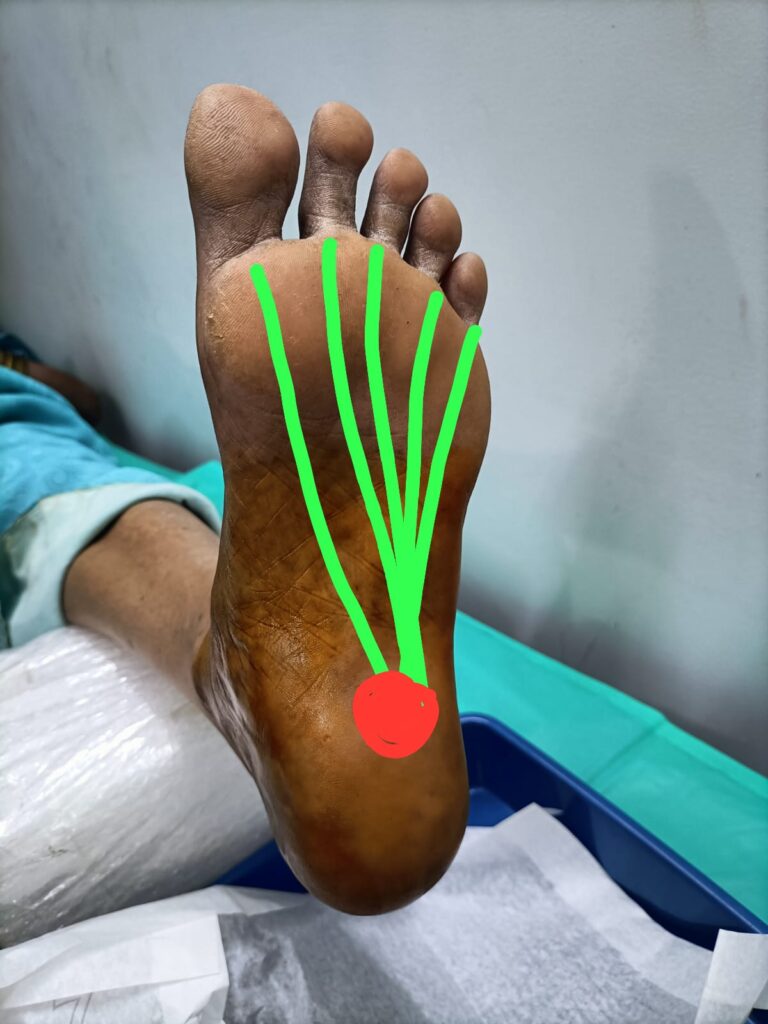
It is the most common causes of heel pain .
Plantar fasciitis is a chronic and painful disabling condition affecting your undersurface of the heel, usually extending towards the metatarsophalangeal joints.
Plantar fascia is a thick fibrous band which is similar to a tough tape used for packaging purpose. Plantar fascia gets inflammed and irritated.
The band gets irritated mostly due to some structural imbalances within the foot.
Getting aged and atrophy of heel fat are risk factors for plantar fasciitis.
Poorly fitting footwear also adds up to the list.
Symptoms
Severe and sharp pain in your heel with the first couple of steps in the morning or after other long periods without weight-bearing.
Pain is more in the bottom of the foot at the inner side near your heel bone but it may radiate in more severe cases.
A limp may be present, and patients may prefer to walk on their toes. Associated tingling, numbness, pain or fever is suspicious of other causes of heel pain like malignancy, infection and neurologic causes
Initially, the pain decreases with walking few steps , but then increases throughout the day as activity increases. In more severe cases, patients complain of heel pain after prolonged sitting. Patients may complain of stiffness in the foot and localized swelling in the heel.
Treatment
Consult your Diabetic foot surgeon at the earliest. He/she will assess your foot condition and use a wide variety of treatments so that you find relief.
Various conservative measures can be used before deciding on surgical management. As there are various causes of heel pain a visit to your diabetic foot surgeon is a must for thorough examination and appropriate treatment.
Patient Education
Patients should be made aware that improvement often takes many weeks or months .
They should also be taught exercises at home which involves stretching the plantar fascia.
Avoid long periods of standing
Lose weight
Stretch the plantar fascia and warm up the leg and foot before participating in exercise
For increased flexibility, stretch the plantar fascia and the calf after exercise
Do not exercise on hard surfaces
Avoid walking barefoot on hard surfaces
Avoid sports that require act of jumping
Wear comfortable customised footwear prescribed by your Diabetic foot surgeon